All About Sprained Ankles

What is an ankle sprain

An ankle sprain is an injury to one or more ligaments in the ankle, usually on the outside which is known as the lateral side. Ligaments are bands of tissue that connect one bone to another and hold joints together. In the ankle joint, ligaments hold the foot bones in between the ends of the leg bones. 

An ankle sprain often occurs when the foot suddenly twists or rolls, forcing the ankle joint out of its normal position. This causes one or more ligaments around the ankle to stretch or tear.

Ankle sprains can happen to anyone at any age. Participating in sports, walking on uneven surfaces, or even wearing inappropriate footwear like high heels can all cause this type of injury.

Swelling or bruising can occur as a result of these tears. Tendons, cartilage, and blood vessels might also be damaged due to the sprain.


Types of sprained ankle

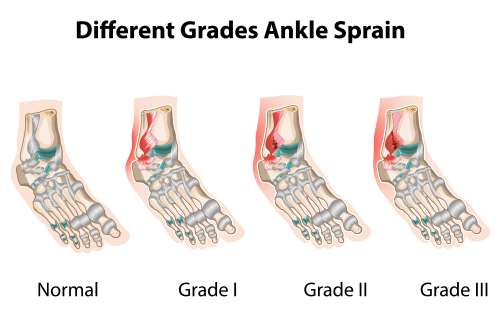
The severity of an ankle sprain depends on whether the ligament is stretched, partially torn or completely torn, as well as on the number of ligaments involved. 

Of the lateral (outside) ankle ligaments, the most common sprain is the anterior talofibular ligament (ATFL) which is slightly in front of your ankle. The other ligaments that may be affected are the calcaneo-fibular (CFL) and posterior talofibular ligaments (PTFL). These are below and slightly behind your ankle, and are less likely to be sprained.

The medial (inside) ankle ligaments are very strong and much less likely to be injured. Known as the deltoid ligament complex the posterior tibiotalar (PTTL), tibiocalcaneal (TCL), tibionavicular (TNL) and anterior tibiotalar ligaments (ATTL) need a severe and forceful “rolling in” of the foot to cause a sprain.

A High Ankle Sprain occurs when the transverse ligaments holding the two leg bones (tibia and fibula) together are injured. This is the least common type of ankle sprain.
First aid for ankle sprains

The principles of ankle sprain treatment are easily summed up with the acronym PRICE. Some people prefer the acronym POLICE where Optimal Loading is substituted for Rest. This addresses the confusion around the meaning of Rest which some people interpret as meaning complete immobilisation.

Protection
Rest or Optimal Loading
Ice
Compression
Elevation

Protection
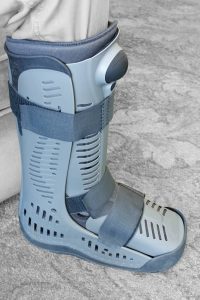
Modern compression boot a popular alternative and post plaster cast support recommended by doctors to provide support on a broken or fractured bone following a serious injury.

This is intended to prevent further injury and might simply mean stopping your activity. It may also involve the use of crutches or a cam walker in the early stages to prevent movement which would further damage the injured ligaments.
The “4 step test” will guide you as to the type of protection needed. If you cannot take 4 steps on the injured foot then you need professional help and investigation, plus protection with crutches and a cam walker device.


Rest / Optimal Loading
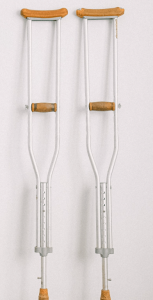
Depending on the severity of the sprain, this might 

mean using crutches for partial weight bearing, or simply limiting your activity to that which is not painful, but still beneficial to healing.


Ice
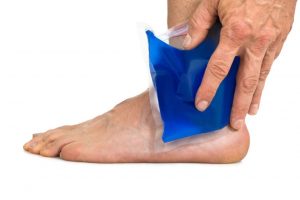
In the first three days use an ice pack wrapped in a damp towel on the area every 3 hours for no more than 20 minutes. Take care if you have diabetes or circulation problems in your legs, that you do not cause a freeze burn or tissue damage.


Compression

Woman with sprained ankle reading on the sofa

Applying an elastic bandage or mild compression garment from the toes to above the ankle will help in managing swelling. Care must be taken to ensure that circulation is not restricted. The bandage can be loosened if it feels too tight.

Elevation

When seated elevate your foot and leg so that it is not hanging down below your hip. This will assist in reducing swelling, and allow blood flow in the area.


Other advice after this type of injury is to avoid HARM

Heat Alcohol Re Injury Massage

Heat alcohol and massage will all affect blood flow in the area, and may interfere with natural healing processes. Re Injury refers back to protection and rest or optimal loading. Doing too much too soon may not be ideal.


Pain Management

An over the counter anti-inflammatory medicine like ibuprofen may help to reduce swelling and inflammation. Be careful that you avoid Re Injury and continue with Rest /Optimal Loading after using this type of medicine. You might feel better, but the ligament still needs to heal.

Recovery from Sprained Ankle

You should start with gentle non-weightbearing exercises, circling your ankle and “writing your name” with your foot. (imagine your big toe is a pencil, and move your ankle to write your name in mid air).

Sitting , use a towel to pull your foot towards you. This will help to stretch the tendons and maintain joint mobility. You may also push your foot back against the towel to work your calf muscles.

Once you are able, gentle weightbearing exercises and walking will help maintain strength. Try balancing on the injured foot for at least 10 seconds.

You should be able to walk normally before you attempt running, and should avoid high impact activities for at least four weeks. Using an ankle brace may assist you to get back to normal activities sooner.
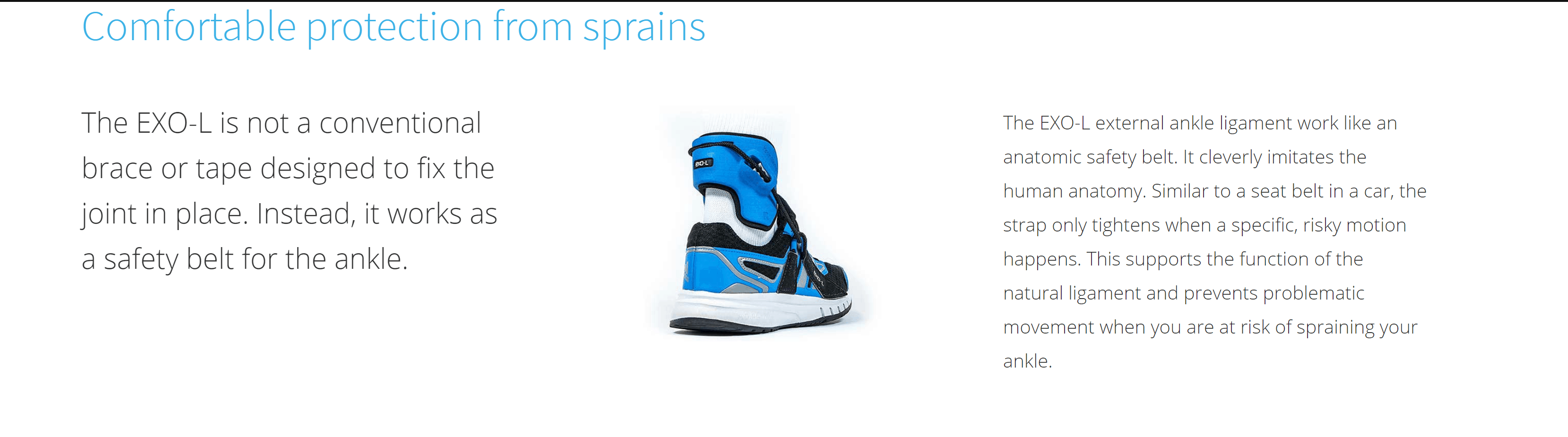
The ankle brace should prevent the ankle from rolling in the direction that caused the sprain.

Book Now

Can I Treat an Ingrown Toenail at Home?

If symptoms are very mild, you may be able to:

  • Soak the foot in warm salt water
  • Keep the area clean and dry
  • Wear wider footwear
  • Avoid digging at the nail with scissors or sharp tools

However, attempting "bathroom surgery" often makes the problem worse and can introduce infection.

If pain, swelling, or infection is present, professional treatment is recommended.


Frequently Asked Questions About Ingrown Toenails

1. Will an ingrown toenail go away on its own?

Sometimes a very mild ingrown toenail may settle with proper nail care and reduced pressure. However, many cases progressively worsen without treatment.

2. What does an ingrown toenail feel like?

Most people experience tenderness along the side of the nail, especially when wearing shoes, walking, or touching the area.

3. How do I know if my toenail is ingrown?

Common signs include pain along the nail edge, redness, swelling, and a sensation that the nail is digging into the skin.

4. Can children get ingrown toenails?

Yes. Ingrown toenails are common in teenagers and children, particularly during growth spurts or when nails are cut incorrectly.

5. Why does my ingrown toenail keep coming back?

Recurring cases are often linked to nail shape, genetics, footwear, sporting activity, or incomplete treatment of previous episodes.

6. Is ingrown toenail surgery painful?

The procedure itself is usually comfortable because a local anaesthetic is used. Most people experience only mild discomfort afterwards.

7. How long does recovery take after nail surgery?

Most patients return to normal daily activities within a few days, although complete healing typically takes several weeks.

8. Can I still work after ingrown toenail treatment?

Many patients return to desk-based work the same day or the following day. Physically demanding jobs may require a short recovery period.

9. Can I play sport with an ingrown toenail?

Mild cases may allow continued participation, but painful or infected nails often worsen with sporting activity.

10. Are ingrown toenails hereditary?

Yes. Curved nails and certain toe shapes can run in families and increase the likelihood of ingrown toenails.

11. What is the best way to cut toenails?

Trim nails straight across and avoid rounding the corners. Nails should not be cut excessively short.

12. Can tight shoes cause ingrown toenails?

Absolutely. Footwear that compresses the toes is a major contributing factor.

13. Can ingrown toenails become infected?

Yes. Broken skin around the nail creates an opening for bacteria to enter.

14. What happens if an infected ingrown toenail is left untreated?

The infection can spread into surrounding tissue and, in rare cases, cause more significant health issues.

15. Are antibiotics enough to fix an ingrown toenail?

Antibiotics may help manage infection but often do not address the actual nail causing the problem.

16. Can diabetics get ingrown toenails?

Yes, and they should seek treatment promptly due to the increased risk of complications.

17. Does soaking help an ingrown toenail?

Warm salt-water soaks may provide temporary relief and help keep the area clean but are not always a definitive treatment.

18. Why do teenagers get so many ingrown toenails?

Teenagers often experience increased sweating, changes in nail growth, sporting demands, and footwear pressures that contribute to ingrown toenails.

19. Can pregnancy increase the risk of ingrown toenails?

Pregnancy-related swelling and difficulty reaching the feet for nail care can increase the likelihood of developing ingrown toenails.

20. How successful is permanent ingrown toenail surgery?

Permanent nail procedures generally have very high success rates and are considered the gold standard for recurrent ingrown toenails.

21. Can I pull out the ingrown section myself?

This is not recommended. Attempting self-treatment frequently worsens pain, infection, and tissue damage.

22. How long should I wait before seeing a podiatrist?

If symptoms persist for more than a few days, are becoming worse, or show signs of infection, book an appointment promptly.

23. Will I lose my whole toenail?

Not usually. Most procedures remove only the problematic edge rather than the entire nail.

24. Can ingrown toenails affect both sides of the nail?

Yes. Some people develop ingrowing on both borders of the same toenail.

25. How can I prevent ingrown toenails?

Prevention strategies include:

  • Cutting nails straight across
  • Wearing properly fitted footwear
  • Managing sweaty feet
  • Avoiding trauma to the toes
  • Seeking early treatment when symptoms develop


Don't ignore a painful toenail

Don't let a painful ingrown toenail stop you from enjoying your daily activities. The earlier an ingrown toenail is assessed and treated, the easier it is to relieve discomfort, prevent infection, and avoid ongoing problems. Whether you're experiencing your first ingrown toenail or you're struggling with a recurring issue, professional podiatry care can provide effective, long-term solutions tailored to your needs.

If you have pain, redness, swelling, or signs of infection, contact Umina Podiatry today to book an assessment. Our experienced podiatrists can help you find relief quickly and keep your feet healthy, comfortable, and pain-free. Call our clinic or book online to take the first step toward lasting ingrown toenail relief.


Call us on 4342 2878 or jump online to book an assessment. 


Where can healthy feet take you...